Eddy Dryer
The future of industrial drying
Innovative induction disc dryer technology. The Eddy Dryer heats each disc by induction instead of steam, reaching over 98% energy efficiency in a 60% smaller footprint. For fish farms it comes as fully tested sludge treatment skids.
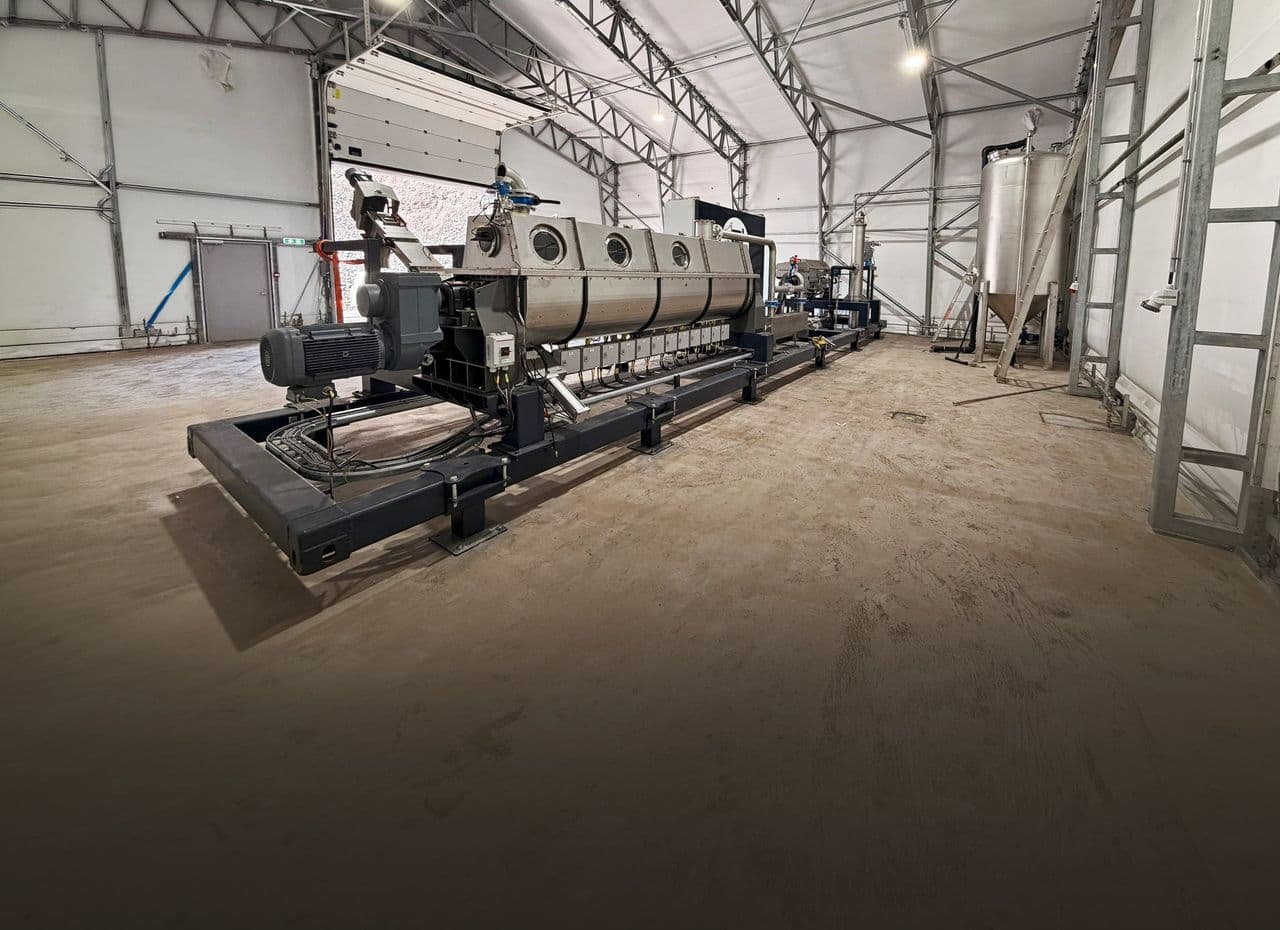
Induction heating with exceptional efficiency
The Eddy Dryer uses induction heating to deliver unmatched energy efficiency, process control and operational simplicity. By removing steam infrastructure and enabling precise temperature management of each disc and zone, the system improves product quality while reducing operating costs and maintenance requirements.
Héðinn's induction drying has proven itself processing side streams from land-based fish farms, including the drying of salmon sludge.
Induction Disc Dryer
What induction disc drying delivers
Each feature of the Eddy Dryer and the benefit it brings compared to conventional steam systems.
Compared to <70% for conventional steam dryers.
Reduction in space requirements and plant complexity.
Precise control of every heating disc.
Optimise the drying profile across the process.
Real-time optimisation and improved product consistency.
Eliminates pressure vessel requirements and steam systems.
In detail
Five things induction drying changes
What induction heating changes in the plant, the energy bill and the end product.
Induction heating instead of steam
Electric induction heats the drying discs directly, like an induction hob, so the steam boiler, piping, valves, pumps and filters fall away. Fewer parts can mean lower investment and less maintenance.
Measured efficiency above 98%
Measurements show 98.3% efficiency in the heating system, compared with about 70% or below for steam systems. A planned industrial project expects energy use to fall by more than 30% compared with steam drying.
Control of every disc and heat zone
Each disc and each heat zone has its own temperature control, with real-time monitoring and remote access. Drying adapts to varying moisture and raw materials for a more consistent end product.
Up to 60% less floor space
With no steam boiler, the dryer needs up to 60% less space than steam drying. Our standard sludge unit is a 12.8 × 2.3 × 3.1 m skid, easily transportable, and the capacity can be increased in phases.
Side streams become a product
Fish-farm sludge, offal and dead fish become a stable, usable product, with less volume to haul or dispose of. The technology also applies to fishmeal processing and municipal sewage sludge.
Salmon sludge from 8% to 92% dry matter
In a joint project between Héðinn and Laxey, the Eddy Dryer dries salmon sludge. The sludge comes in at about 4-8% dry matter, reaches about 25% after mechanical dewatering, and the dryer then takes it to about 92%. The aim is to turn the sludge from a waste and cost item into a stable, nutrient-rich product that can be used for fertiliser, among other things.

Fully tested skids ready for operation
For fish farms, the Eddy Dryer comes as a standard sludge treatment skid, fully tested and ready for immediate operation.
The standard skid handles farms processing up to 12,000 tonnes a year. Sludge input at 8-10% dry matter, with output of 85-95% depending on your preferences. The system is built to run 24/7 with a control system and remote connection.
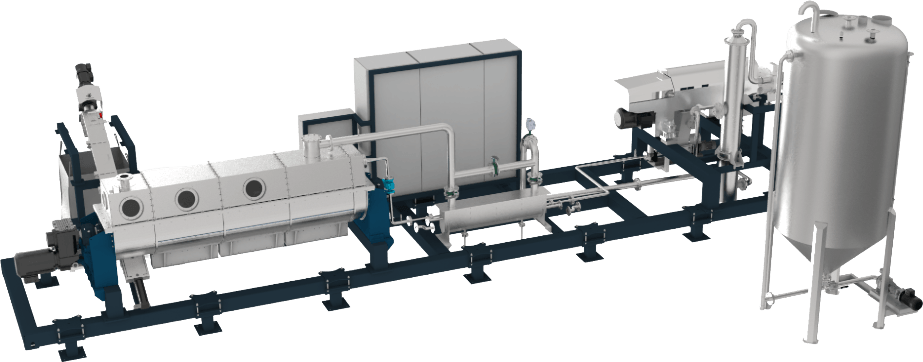
Standard skid specifications
The Eddy Dryer sludge treatment skid as standard.
| Feature | Our standard skid |
|---|---|
| Capacity | Handles farms processing up to 12,000 t/yr |
| Dimensions | 12.8 m × 2.3 m × 3.1 m |
| Input/output DM (%) | 8-10% DM inlet, 85-95% DM outlet |
| Heat recovery | With or without a heat exchanger for the sludge inlet |
| Installed power | 385 kW (400 V) |
| Operation | 24/7 with a control system and remote connection |
Frequently asked questions about the Eddy Dryer
The Eddy Dryer is an induction dryer that uses induction heating to dry organic material with high energy efficiency and precise temperature control.
Unlike steam dryers, the Eddy Dryer uses no steam system or pressure vessels. The system offers temperature control for each disc and can reach over 98% energy efficiency.
The system is suited to drying salmon sludge, offal, dead fish and other organic side streams from aquaculture, among others.
Standard units are designed for facilities processing up to 12,000 tonnes per year.
Measurements have shown 98.3% efficiency in the heating system, against about 70% or below for conventional steam systems. In a planned industrial project, energy use is expected to fall by more than 30% compared with conventional steam drying.
Yes. Besides fish-farm sludge, offal and dead fish, the technology has applications in fishmeal processing and in treating municipal sewage sludge.
Yes. The standard unit is a self-contained processing skid, and the modular design supports expanding production in phases.
Book a demonstration and performance assessment
Contact us for a demonstration and performance assessment of your drying process.
Gjáhella 4, 221 Hafnarfjörður | +354 569 2100 | hedinn@hedinn.is